What Is Ruqyah In Islam
What Ruqyah Means in Islam
The word Ruqyah in its linguistic (dictionary) meaning refers to recitation, seeking protection, or incantation. It traditionally describes the act of reading words for relief or shielding from harm.
In the Sunnah and Islamic usage, Ruqyah refers specifically to reciting Qur’anic verses, authentic duas, and remembrance of Allah for protection, healing, and spiritual strengthening.
Ruqyah comes from the Arabic root raqa (رقى), which means to recite for protection or healing. In the classical texts, it refers to turning to Allah for relief from harm — physical, emotional, and spiritual — through His words and authentic duas. It has been practiced since the time of the Prophet ﷺ and recorded in authentic hadith collections.
Our Stance on Prophetic Ruqyah
Our position is clear: authentic Ruqyah must come exclusively from the Qur’an and the Sunnah. This includes
Qur’anic verses
Authentic prophetic duas
Words of protection taught by the Prophet ﷺ
Names and attributes of Allah
Our position is clear: authentic Ruqyah must come exclusively from the Qur’an and the Sunnah. This includes
We categorically reject:
Taweez and amulets
Numerology and symbols
Chanting or rituals not found in the Sunnah
Cultural practices falsely labelled as Ruqya
Our approach remains grounded in evidence, sound fiqh, and the teachings of the Prophet ﷺ, ensuring clients receive guidance that is both spiritually correct and ethically safe.
In addition to the Qur’an and Sunnah, our understanding of Ruqyah is also informed by tajrubah — real-world experience gained from thousands of cases. This practical insight allows us to recognise patterns, differentiate between types of afflictions, and approach each case with both scholarly grounding and trained clinical awareness.
The Difference Between Self-Ruqyah and Practitioner-Led Ruqyah
Self-Ruqyah is encouraged for every Muslim. It is simple and rooted in turning to Allah privately with Qur’an, duas, and dhikr. However, it also has limitations — most people are untrained in this field, unfamiliar with the signs of sihr, jinn, and ayn, and often unsure how to interpret their own symptoms. Without understanding the issue at hand, self-Ruqyah can be difficult to apply effectively, especially when symptoms are persistent, complex, or misinterpreted.
Practitioner-led Ruqyah, however, serves a different purpose. A trained Raqi or scholar is able to:
Recite with strength, consistency, and focused intention
Observe physical and emotional reactions
Distinguish between sihr, ayn, and jinn-related patterns
Recognise non-spiritual issues that people often misinterpret
Apply specific techniques and knowledge when reactions occur during Ruqyah — such as episodes of possession, intense movement, or emotional release — in a safe, controlled, and Islamically-grounded manner
Provide structured spiritual guidance based on experience
At Ruqyah Treatment UK, our practitioner-led sessions are diagnostic in nature. The aim is not only to recite, but to identify the root cause of what a person is experiencing — using Qur’an, Sunnah, and clinical awareness developed through extensive tajrubah.
Self-Ruqyah strengthens the believer. Practitioner-led Ruqyah clarifies what the believer is facing.
Common Misconceptions About Ruqyah
Many misunderstand Ruqyah due to cultural practices, online misinformation, or fear-based narratives. Some of the most widespread misconceptions include:
“Every problem is spiritual.”
Not every difficulty, illness, or emotion is linked to sihr, jinn, or the evil eye. Many people misinterpret stress, trauma, or medical conditions as spiritual afflictions. A trained practitioner can differentiate between the two with clarity.
“Reading any amount of Qur’an will fix everything immediately.”
Ruqyah is not a magic formula or instant cure. It is an act of worship, often requiring consistency, patience, and correct understanding.
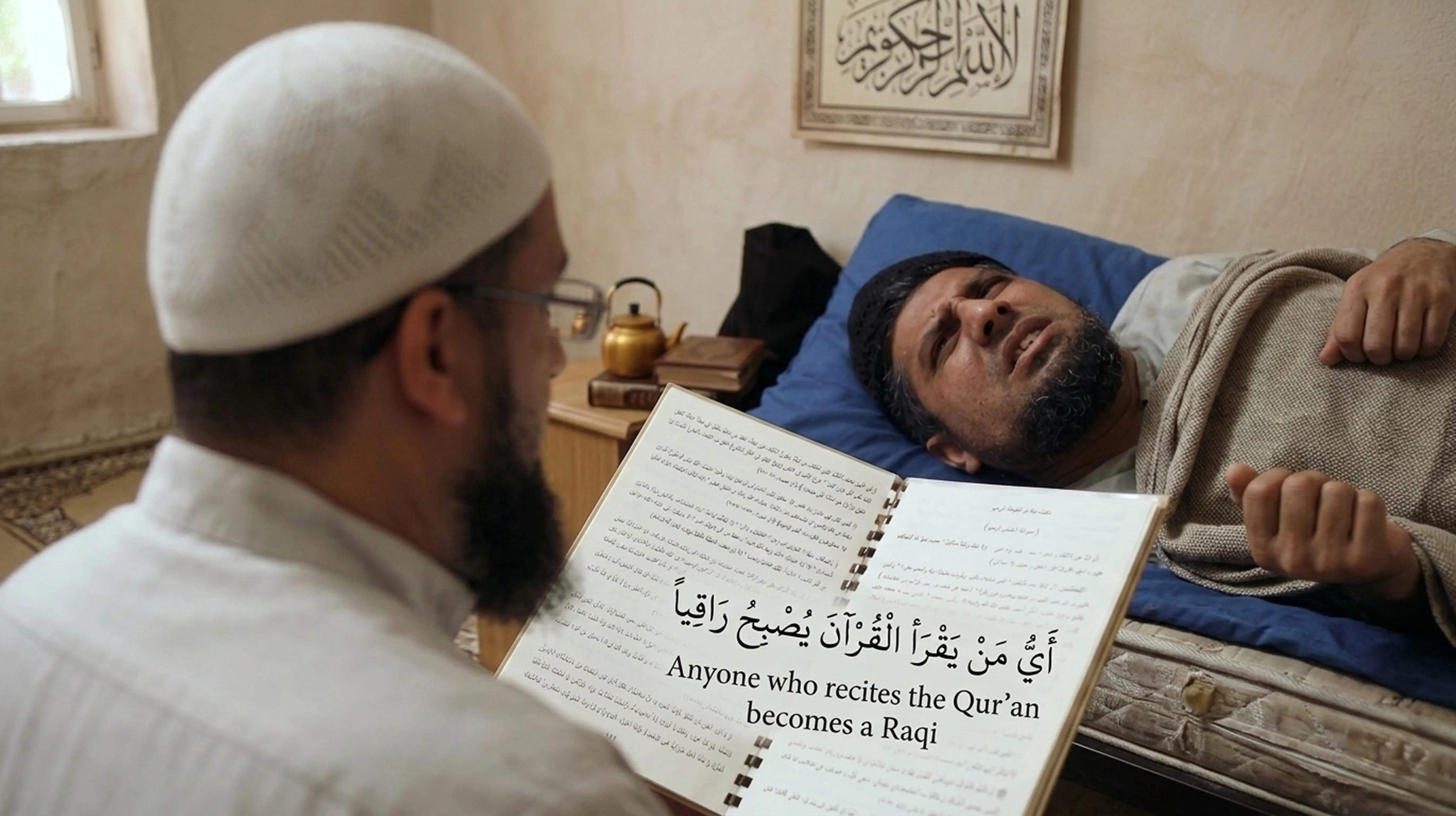
“Anyone who recites Qur’an becomes a Raqi.”
Reciting the Qur’an is meritorious, but Ruqyah requires:
The process must always be:
knowledge of the Sunnah’s guidelines
understanding of spiritual patterns
experience in assessing reactions
awareness of safety and ethics during sessions
“Following cultural rituals is part of Ruqyah.”
Practices such as burning items, writing symbols, blowing on objects, or using taweez do not come from the Qur’an or Sunnah. These must be avoided.
“If a person reacts, it means they are definitely possessed.”
Reactions can stem from:
fear or anxiety
suggestion or expectation
emotional release
trauma responses
medical conditions
A trained Raqi knows how to distinguish spiritual reactions from non-spiritual ones.
“A reaction is required for Ruqyah to ‘work.’”
Some people — and even some untrained raqis — believe that a person is only spiritually affected if they react during Ruqyah. This is incorrect.
A reaction is not a condition for Ruqyah. Its absence does not mean everything is fine, and its presence does not automatically indicate sihr or possession. The purpose of Ruqyah is to seek Allah’s protection, diagnosis, and healing — not to force a reaction.
A trained Raqi understands this balance and does not rely on dramatic responses as proof of affliction.
These misconceptions are why Ruqyah must be practised with knowledge, balance, and discipline. At Ruqyah Treatment UK, we prioritise clarity, evidence, and safety in every case we handle.
How Sihr, Ayn, and Jinn Afflictions Appear Differently
While all three fall under the category of spiritual harm, they manifest in distinct ways. Understanding these differences is essential for accurate diagnosis, rather than assuming every symptom is the same.
Sihr (Black Magic)
Sihr is an intentional act carried out through unlawful means to harm, block, or influence a person. From our experience and the classical texts, sihr often presents with:
sudden, unexplained blockages in life
recurring patterns that defy normal causes
intense aversion between spouses or family members
Recurring dreams connected to fear, darkness, or specific individuals
emotional heaviness without obvious triggers
Ayn (Evil Eye)
Ayn refers to harm caused by envy or admiration. It typically appears as:
sudden fatigue
unexplained illness or weakness
loss of appetite or motivation
continuous setbacks after moments of success
physical discomfort without a medical explanation
Ayn often comes from those close to the individual — sometimes unintentionally.
Jinn-Related Afflictions
These vary widely and may include:
intense fear or anxiety without cause
disturbed sleep or sleep paralysis
sudden emotional shifts during Qur’an recitation
overwhelming thoughts or internal whispers
physical reactions during Ruqyah, such as shaking, heaviness, or tightening in the chest
Not every sign confirms jinn involvement. Many symptoms overlap with psychological, emotional, or medical conditions — which is why proper assessment is critical.
At Ruqyah Treatment UK, we rely on Qur’an, Sunnah, and trained diagnostic experience to understand what a person is truly facing.
How Ruqyah Is Performed Correctly
Authentic Ruqyah follows clear guidelines established in the Qur’an and Sunnah. It is a spiritual act of devotion, not a ritual of force, drama, or cultural practices.
Core Elements of Correct Ruqyah
Recitation of Qur’anic verses
Recitation of authentic prophetic supplications
Dhikr and remembrance of Allah
Blowing lightly after recitation (optional, based on fiqh)
Sincerity and reliance upon Allah
These are the foundations taught by the Prophet ﷺ.
What Ruqyah Must Never Include
writing symbols or unknown phrases
taweez, amulets, or charms
numerology or coded letters
burning items or performing rituals not found in Islam
asking jinn for help or “commanding” them
Such practices are not part of Islam and may cause more harm than benefit.
The Purpose of Proper Ruqyah
Ruqyah is not about chasing reactions or dramatic outcomes. It is about:
seeking Allah’s protection
clarifying what a person is facing
strengthening faith
bringing spiritual grounding
When done correctly, Ruqyah becomes a means of diagnosis, clarity, and healing — without exaggeration or unsafe methods.
When Should Someone Seek Practitioner-Led Ruqyah?
While every Muslim can perform self-Ruqyah, there are situations where seeking a trained practitioner becomes important. Through our experience, people often seek guided Ruqyah when they face:
1. Persistent symptoms with no clear medical or emotional cause
Ongoing anxiety or fear without explanation
unexplained aversion between spouses or family members
recurring nightmares or disturbed sleep
sudden and repeated blockages in important areas of life
2. Confusion about whether symptoms are spiritual or non-spiritual
Many individuals simply do not know what they are dealing with. A trained Raqi can differentiate between:
sihr patterns
ayn-based symptoms
jinn-related signs
psychological or emotional factors
stress or trauma responses
3. Strong reactions or distress during self-Ruqyah
If a person experiences overwhelming emotions or intense reactions when reciting the Qur’an, a practitioner-led assessment provides a safe and structured environment.
4. Lack of knowledge or uncertainty about how to recite properly
Many people want to perform Ruqyah, but are unsure about:
What to recite
for how long
How to interpret changes
whether their symptoms are normal
5. The need for clarity rather than guesswork
A proper diagnostic session gives the person clarity and direction. Instead of guessing or feeling lost, the individual gets:
an informed assessment
a clear understanding of what they are facing
guidance on next steps rooted in Qur’an and Sunnah
At Ruqyah Treatment UK, we specialise in helping individuals understand their situation through structured, ethical, Qur’an-based assessment — not fear, guesswork, or exaggeration.
The Role of Diagnosis in Ruqyah
One of the most overlooked aspects of Ruqyah is diagnosis. Many people focus solely on recitation, but authentic and effective Ruqyah begins with understanding what a person is actually facing. Without clarity, a person may spend months or years applying the wrong approach.
What a Proper Diagnosis Involves
A trained Raqi does far more than recite. He observes and evaluates:
patterns, depth, and consistency of symptoms
reactions or changes during Qur’anic recitation
The spiritual feedback a person displays — including resistance, discomfort, or emotional shifts — and interprets these responses with trained insight and firasah (intuition)
non-spiritual factors such as emotional stress, trauma, or medical conditions
recurring blockages, aversions, or behavioural shifts
dreams or experiences that may provide context (not definitive proof)
This structured evaluation prevents assumptions and keeps the process grounded in knowledge rather than guesswork.
Why Diagnosis Matters
Without proper assessment:
A person may treat the wrong issue
emotional or medical issues may be mistaken for spiritual problems
True sihr or ayn may be missed or misunderstood
Individuals may fall into unnecessary fear, confusion, or self-blame
Diagnosis brings clarity, direction, and confidence. It ensures the person receives guidance rooted in Qur’an, Sunnah, and trained experience — not fear, superstition, or trial-and-error.
What Diagnosis Is:
Not
It is not fortune-telling
It is not predicting the unseen
It does not involve jinn communication or risky methods
It is not based on dramatic reactions alone
Diagnosis in Our Practice
At Ruqyah Treatment UK, diagnosis combines:
Qur’anic recitation
Sunnah-based approach
real-case experience (tajrubah)
trained pattern recognition
This allows us to give clients a clearer understanding of their situation and remove unnecessary fear, confusion, or assumptions.
Conclusion
Ruqyah is a simple, authentic, Qur’an-and-Sunnah-based practice that brings clarity, protection, and spiritual grounding. When performed with knowledge and sincerity, it helps a person understand what they are facing and reconnect with Allah in times of difficulty. Whether symptoms are truly spiritual or not, the goal of Ruqyah is always the same: to seek Allah’s help, guidance, and relief in the most authentic way.
اللهم اشفِ عبدَك من كل همٍ وضر، وأزل ما نزل به، وادفع عنه كل أذى، واجعل القرآن نور صدره وشفاء قلبه.
O Allah, heal Your servant from every harm and distress. Remove what has afflicted them. Protect them from every form of harm, and make the Qur’an the light of their chest and the healing of their heart.
Explore Related Topics:
How to Perform Self-Ruqyah at Home – Complete Islamic Guide