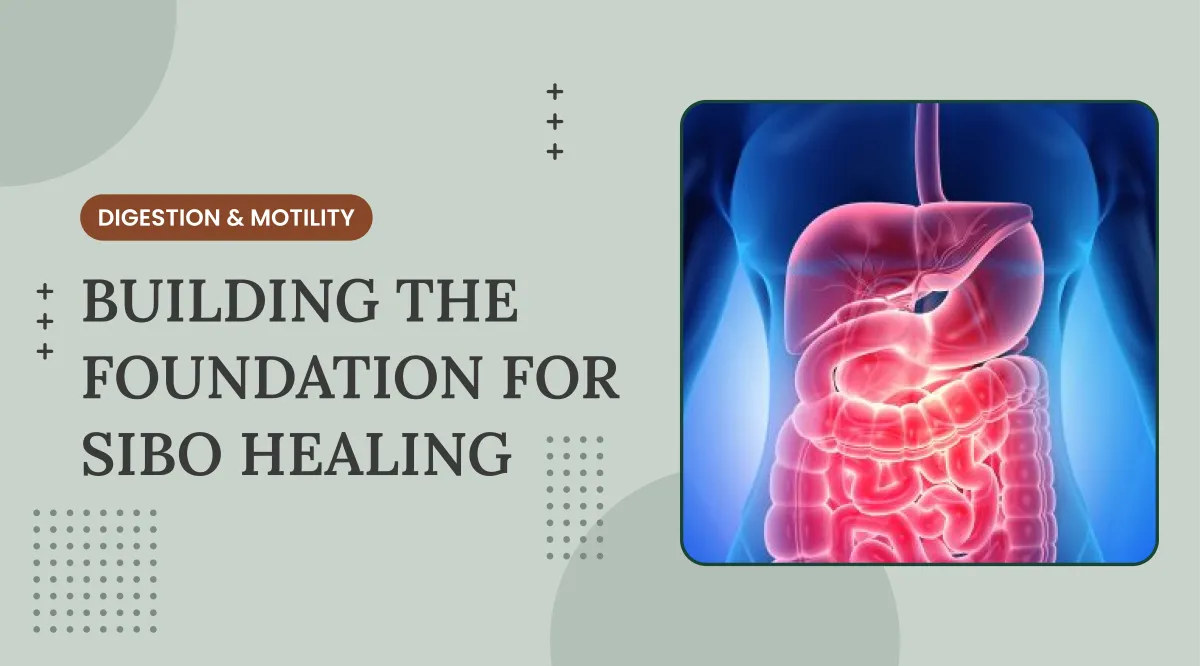
The Foundation Phase of SIBO Healing: Why Digestion and Motility Matter First
If you’ve ever tried to treat SIBO and felt worse instead of better, it’s easy to assume something went wrong, that you chose the wrong protocol, didn’t stick with it long enough, or that your body is unusually sensitive.
For many women in perimenopause and menopause, that isn’t the problem at all.
Often, the issue is that treatment began before the body was ready. The Foundation Phase of SIBO healing exists to change that. Rather than focusing on eliminating bacteria right away, this phase supports the basic functions that allow the gut to heal: digestion, gut motility, and nervous system regulation.
What Is the Foundation Phase of SIBO Healing?
The Foundation Phase is about restoring the body’s capacity to digest, move food efficiently through the gut, and respond calmly to stress. These are not optional extras; they are prerequisites for successful SIBO treatment, especially in midlife.
During perimenopause and menopause, these systems are often under quiet strain. Hormonal shifts, chronic stress, disrupted sleep, and years of dieting can all weaken digestive efficiency long before SIBO is ever identified. When those foundations are compromised, even well-designed treatment plans can feel overwhelming or ineffective.
Why Preparation Is Essential for Women Over 40
After 40, the digestive system tends to have less margin for error. Digestion may slow more easily, stress responses may linger longer, and recovery from restriction or illness may take more time.
Preparing the gut before treatment isn’t about delaying healing. It’s about making healing possible. When preparation is skipped, women often experience increased bloating, fatigue, constipation, or heightened food sensitivity during treatment. Not because treatment is wrong, but because the system is already overloaded.
Under-Digestion as a Root Cause of SIBO
One of the most overlooked contributors to SIBO is under-digestion. When food isn’t fully broken down, it lingers in the digestive tract and becomes fuel for bacterial fermentation in the small intestine.
In midlife, under-digestion often develops gradually. Stomach acid production may decline. Enzyme output may be less robust. Bile flow may slow. None of these changes are dramatic on their own, but together they can significantly alter how food is processed.
Stomach Acid, Enzymes, and Bile Flow in Midlife
Stomach acid initiates the entire digestive process, signaling enzyme release and supporting nutrient absorption. Enzymes further break food down, while bile emulsifies fats and helps regulate bacterial balance in the gut.
When these processes are sluggish, digestion feels heavier and less efficient. Supporting them gently can reduce fermentation at the source, often easing bloating and discomfort even before any direct SIBO treatment begins.
This is why many women notice meaningful symptom improvement during the Foundation Phase alone, not because SIBO has been treated, but because digestion is finally being supported.
Gut Motility and the Migrating Motor Complex (MMC)
Gut motility refers to how effectively food and bacteria move through the digestive tract. A key part of this process is the migrating motor complex (MMC), a cleansing wave that moves through the small intestine between meals.
When the MMC functions well, it helps clear residual food particles and bacteria, acting as a natural defense against bacterial overgrowth.
How Stress, Sleep, and Meal Timing Affect SIBO
The MMC is highly sensitive to stress, poor sleep, irregular eating patterns, and constipation. During perimenopause and menopause, hormonal fluctuations can make the gut even more reactive to these disruptions.
When meals are constantly grazed, sleep is fragmented, or stress remains high, the MMC may not activate consistently. Over time, this creates an environment where bacteria are more likely to linger and multiply in the small intestine.
Supporting motility is not about forcing the gut to move faster. It’s about restoring the conditions that allow these natural cleansing rhythms to function again.
Why the Foundation Phase Reduces SIBO Relapse Risk
SIBO relapse is common when treatment focuses only on bacteria and ignores the environment that allowed overgrowth to develop in the first place.
By supporting digestion, improving motility, and calming the nervous system, the Foundation Phase helps shift that environment. Treatment becomes easier to tolerate, symptoms are less reactive, and the risk of repeating the same cycle later on is significantly reduced.
Supporting the Gut Before Treatment Begins
When the gut is supported rather than stressed, healing tends to unfold more smoothly. This is especially true in midlife, when aggressive, one-size-fits-all approaches often backfire.
The Foundation Phase isn’t about doing less; it’s about doing what actually matters first.
How the Foundation Phase Fits into the Bigger Picture
If you’re new to this framework, start here:
👉 SIBO in Perimenopause and Menopause: Causes, Symptoms, and a Root-Cause Healing Approach
Once the foundation is in place, the body is far better prepared for the next stage of healing.
FAQ: The Foundation Phase of SIBO Healing
What is the foundation phase of SIBO healing?
The foundation phase focuses on supporting digestion, gut motility, and nervous system balance before directly treating bacterial overgrowth.
Why shouldn’t SIBO treatment start right away?
Without proper digestion and motility, treatment can worsen symptoms or increase relapse risk, especially in women over 40.
How long does the foundation phase last?
The timeline varies by individual, but many women benefit from several weeks of foundational support before moving into active treatment.
What Comes Next
Once digestion and motility are better supported, treatment can move forward with far more clarity and confidence.
Next in the series:
The SIBO Fix Phase: Reducing Bacterial Overgrowth Without Extreme Diets